
Context Over Outrage

I’ve often remarked in these pieces over the past year that taking a less pessimistic stance about the world today can be enraging to many people, as if any note of optimism undermines the reality of real and serious issues both domestically and globally. I just had a piece published in the Washington Post that highlights that challenge.
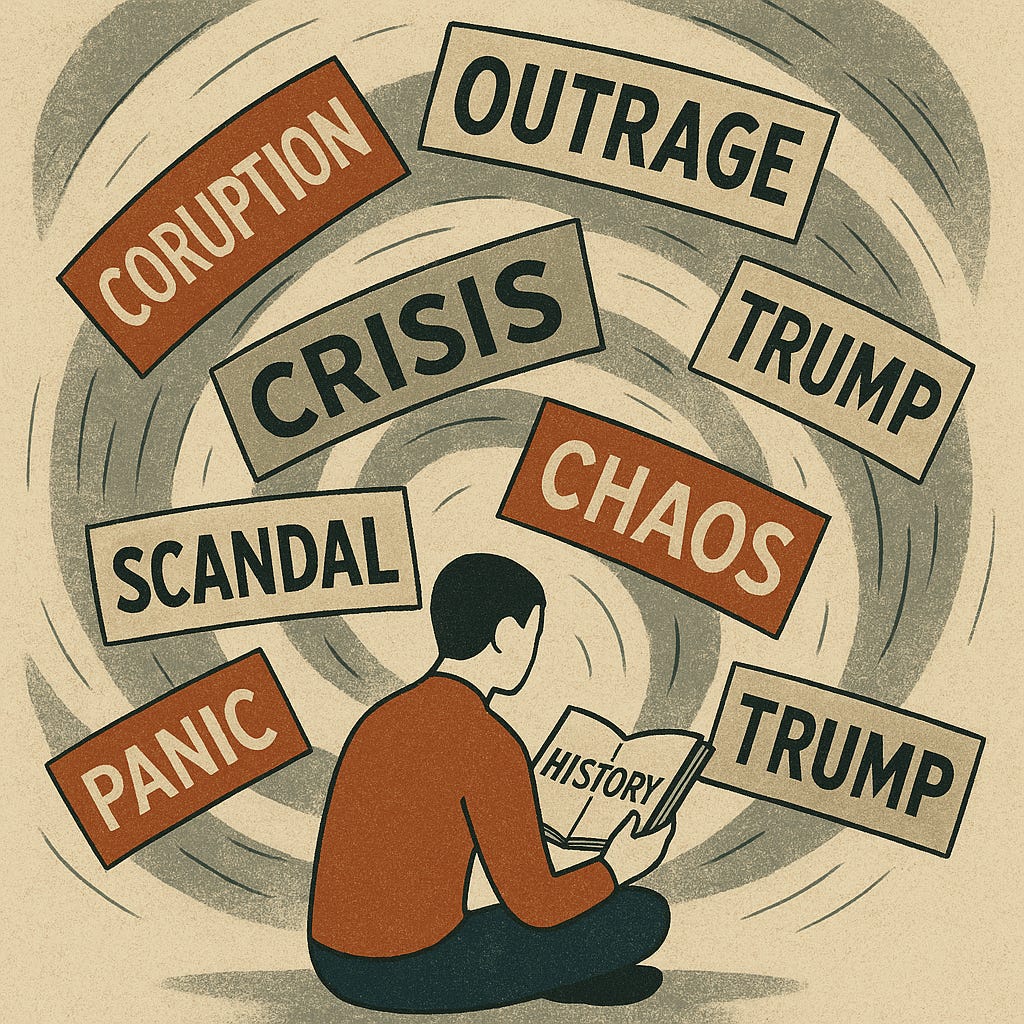
Titled “Shocked by Trump’s profiteering? Here’s some perspective,” the op-ed underscores just how much graft and corruption there was in the American past - particularly in the Gilded Age in the last decades of the 19th century - as a way of putting the current graft and corruption of Trumplandia into perspective. Yes, as I say clearly in the piece, today’s level of graft is unprecedented in recent times. And that level of graft is clearly some combination of immoral, illegal and corrupt. But that does not, in my view, pose some existential threat to democracy and freedom.
The comments on the piece, of which there are hundreds, are resoundingly hostile to the piece, accusing it of normalizing corruption, crass whataboutism, and serving the interests of oligarchs such as Jeff Bezos and apologizing for the administration. Many writers will say “don’t read the comments,” but as I do with this Substack, reading and digesting what people say and think in response to what I say and think is both respecting one’s readers and trying to build community, even if it is a community partly composed of people who think I’m an idiot.
I do agree that there is some “normalization” in saying that we as a country have been here before (no past parallel is ever exact and that isn’t the point of learning from history). But normalization in this context does not mean accepting or saying “hey, no big deal.” It means normalizing what is awful about us, accepting our collective dark side as an ineluctable aspect of who we have been and continue to be rather than greeting every new example of that with hysteria, rage, and fear. Those emotions in a social-media-fueled age spread with ease and speed and have their own dangerous potency. The point, then, is not to blithely ignore our problems today, or passively watch. It is to integrate them, understand the deep cultural roots, and from there, think through the most effective ways to reform. That is what the first Progressives of the late 19th and early 20th century did (although they too were often guilty of rage, hysteria and hyperbole), and that is the task of this generation.

Thank you for this excellent comment! Our human tendency to forget yesterday as we go berserk over today is only worsened by an avalanche of updates and headlines from 24-hour news and nonstop social media. As I've said in my own Substack, even George W. Bush was by many measures a much worse president than Trump will ever be, and yet try bringing a sign saying that to the next No King's rally. A healthy democracy needs a solid grasp of the recent and remote past and a dispassionate critical perspective - thanks for providing that in your work!
Good on you for not following the baying of the crowd which thrives on discord and chaos, the very tactic the coup plotters use. Eternal struggle, who sits by the fire on a cold night or gets the best piece. Sense a cynic here? Far beyond that, we’re stuck in the primal, only hope I have is that the availability of truth and science kicks progress in the butt and moves us faster up the evolutionary ladder!